Our events provide a range of gatherings, talks, workshops, screenings, and other special activities that explore Islamic visual culture, collections, games, XR, and related creative fields. Each event offers a chance to discover new ideas, share knowledge, and connect with practitioners, researchers, and audiences across disciplines.
Edinburgh Futures Institute
In-person annual gathering in Edinburgh, bringing together the Digital Lab community, museum curators, artists, and researchers working across Islamic visual culture, games, and digital heritage.
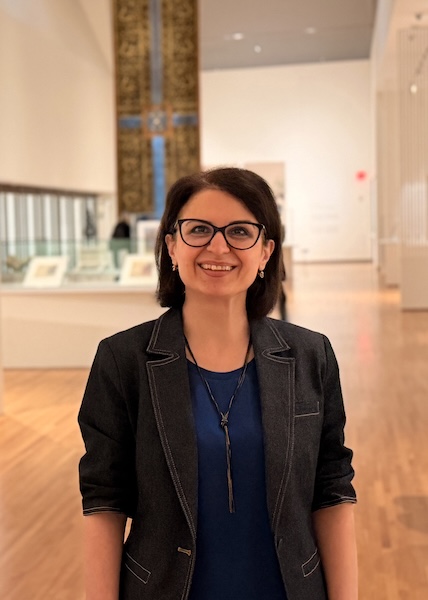
Bita Pourvash, Curator at the Aga Khan Museum, opened with a look at exhibiting digital simulation artworks alongside historic collections. Drawing on Damask Rose, artist Jawa El Khash's digital reconstruction of Damascus's 18th-century Azem Palace fountain, she examined how participatory digital works shift museum visitors from viewing to embodied experience.

Dr. Glaire Anderson, Founding Director of DLIVCC and Senior Lecturer in Islamic Art, University of Edinburgh made the case that video games are a legitimate site of historical inquiry, and that historians of art/architecture have a responsibility to engage with games as seriously as any other artistic medium.
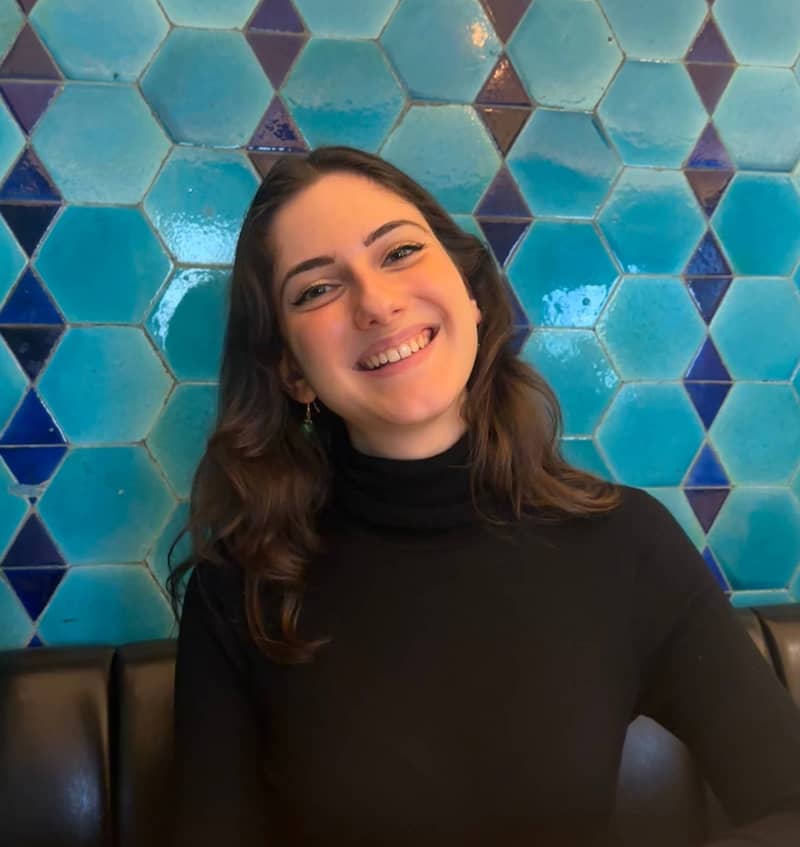
Deniz Vural, DLIVCC Researcher, examined self-Orientalism in video games and popular media produced within the region, with a focus on Turkish games and television, alongside Orientalist stereotyping of Islamic lands in East Asian game studios' work.
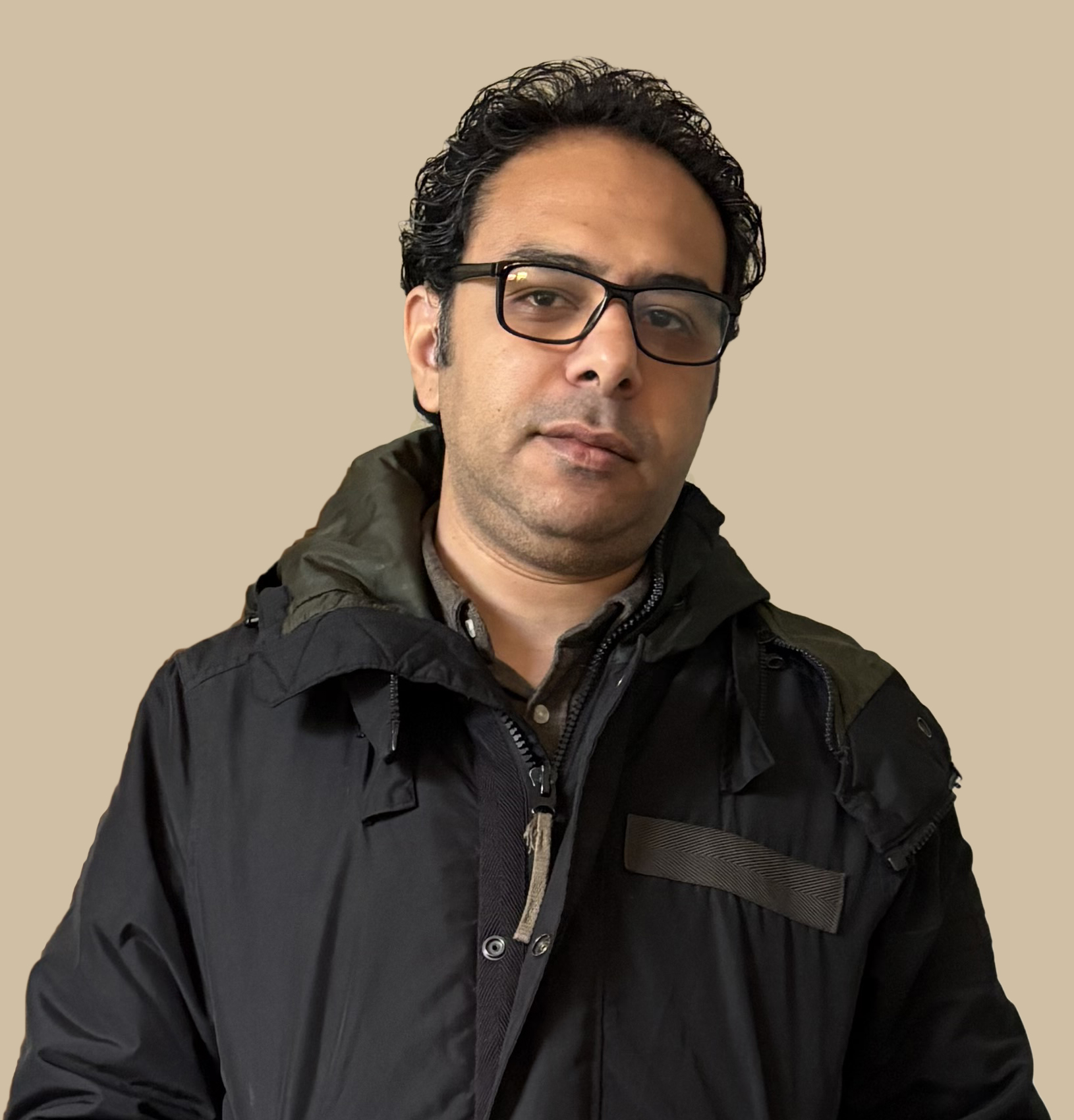
Ahmed El Shaer, PhD candidate at Abertay University and an exhibiting artist, traced video games as an art form in the Arab world, from early gaming culture to contemporary game-based art by artists including Wafaa Bilal, Marwa Benhalim, and Sameh Al Tawil, and events such as CairoTronica and the Machinima Marathon.
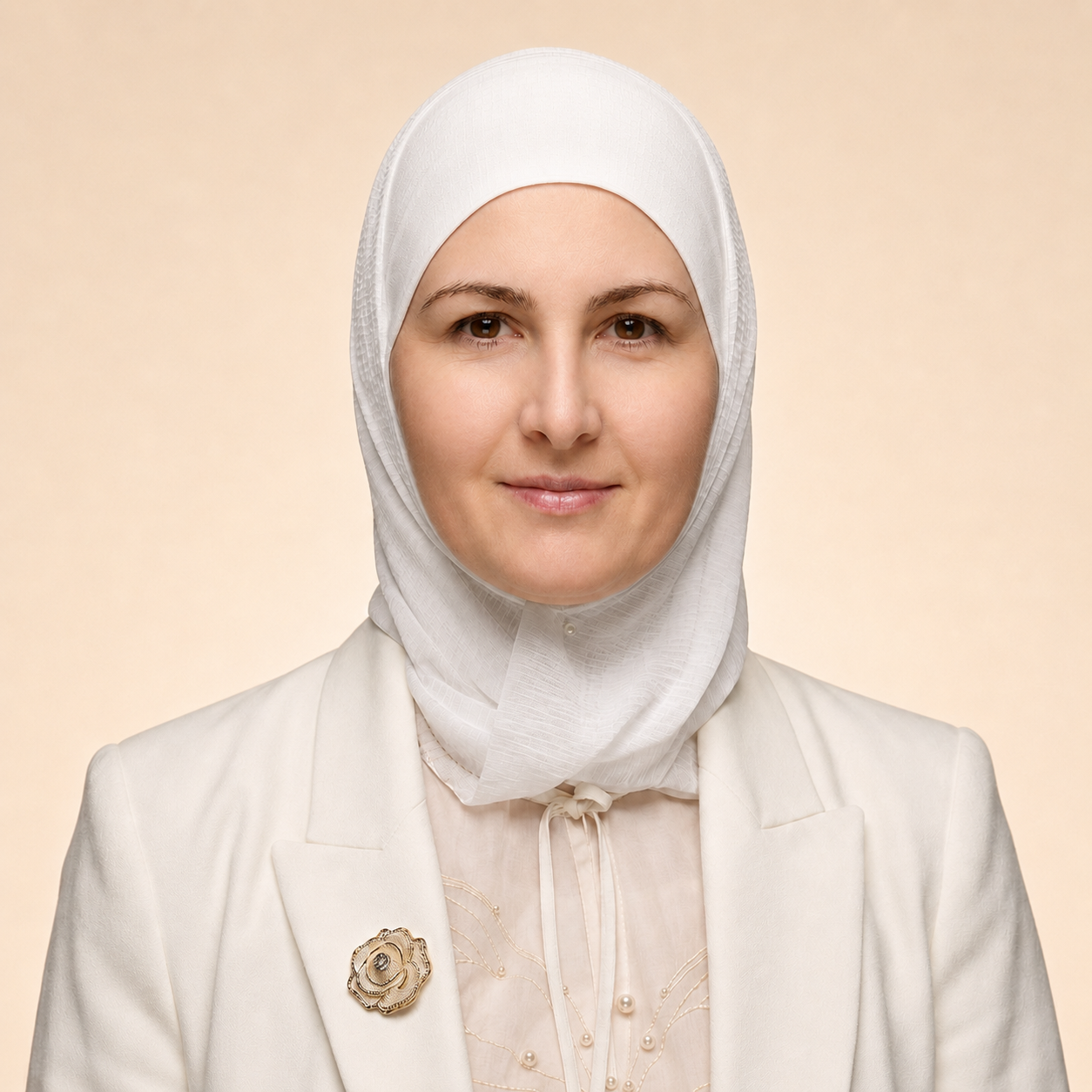
Hala Qasqas, Barakat Trust Research Fellow at the Khalili Research Centre, Oxford, and founder of Riwaq, introduced her digital archive of Syria's living heritage, using the Damascus silk industry to trace the makers, materials, and urban life behind a single craft tradition.
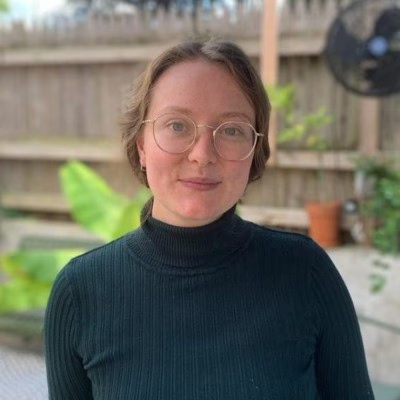
Isabella Inskip, PhD candidate at the University of Edinburgh, reflected on her role on the history team for Digital Munya 3, the tenth-century Córdoba game framework developed with Ubisoft World Design Director Maxime Durand, and how that research process now informs her doctoral work on digital visualisation and historical evidence gaps.
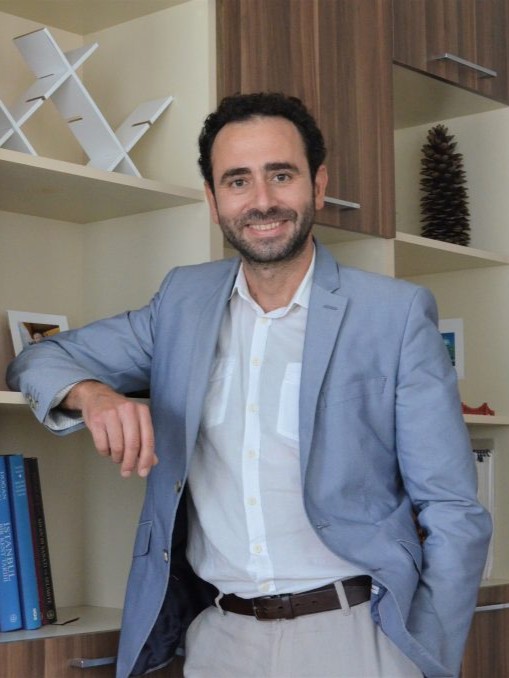
Muzaffer Özgüleş, Barakat Trust Research Fellow at the Khalili Research Centre, Oxford, presented Architect Sinan Adventure, his long-running children's novel on the Ottoman master architect, as a model for a proposed multilingual animation channel bringing architectural history to broad audiences.
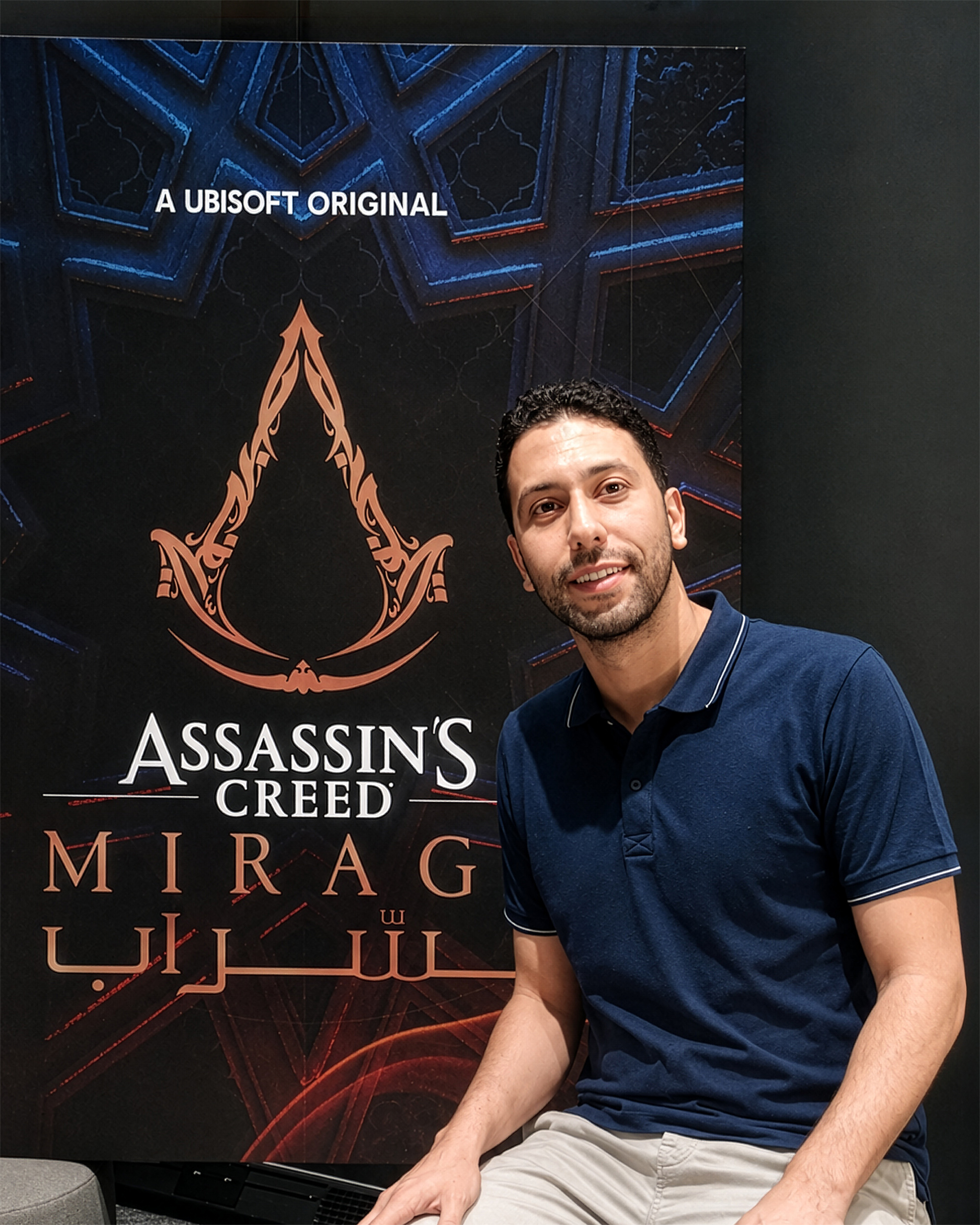
Hatem Arafa, calligraphy artist and designer, walked through the creative process behind the Assassin's Creed Mirage crest and in-game calligraphy, developing a visual language for ninth-century Abbasid Baghdad.
Edinburgh Futures Institute, National Museums Scotland, University of Edinburgh Heritage Collections, University of Glasgow XR Lab, Glasgow Life Museum Collections
In-person annual gathering, bringing together the Digital Lab community, museum curators, artists, and researchers working across Islamic visual culture, games, and digital heritage.
We kicked off Day 1 of Digital Lab Days with a vibrant exchange of ideas at the intersection of Islamic art, immersive technologies, and decolonial critique.
The day opened with presentations and panels that explored how digital platforms—from video games to virtual museums—can reshape how global audiences engage with Islamic visual cultures.
🔍 Highlights:
reflected on creative resistance, identity, and narrative in games, drawing from his work at Biome Collective.
shared a powerful critique of Orientalist tropes in both violent and family-friendly games, asking how developers can move toward more ethical and accurate cultural representation.
introduced us to experimental XR storytelling that rethinks memory and migration in Nubian contexts.
presented his perspectives as programmer for The Cordoba Journey, a richly detailed educational game set in 10th-century Islamic Spain.
(Izzy) gave us a glimpse into the digital visualisation of Mughal nomadic architecture and its contemporary relevance.
demonstrated how immersive technologies can preserve and narrate Islamic heritage in collaborative, community-centered ways.
Digital Lab Days 2025, Edinburgh
Edinburgh Futures Institute
Led by Halley Ramos, Co-Founder of S.O.E. and an Adjunct Professor at Columbia University, the session introduced participants to the fundamentals of:
🔹 3D scanning using mobile workflows
🔹 Photogrammetry techniques for cultural heritage preservation
🔹 Ethical approaches to documenting and interpreting objects and sites
🔹 Collaborative storytelling with community curators and GLAM institutions
Participants had the opportunity to work with objects and learn how immersive documentation can be used to support preservation, research, and education. The workshop demonstrated how accessible digital tools can empower cultural workers and communities alike.
📍 This session was part of our commitment to practical, replicable digital heritage methods—blending scholarship, technology, and community.
DAY 2
Islamic manuscripts and works on paper
On Day 2 of the program, a select group of participants had the rare opportunity to engage hands-on with some of the University of Edinburgh's most significant Islamic manuscripts and works on paper.
This deep dive into the collections was not only a visual delight but also a reminder of the layered histories these manuscripts carry—across empires, borders, and digitisation labs.
Huge thanks to Sâqib Bâburî, Rachel Hosker, and the Centre for Research Collections team for their generosity and care.
Curated by Dr. Sâqib Bâburî (World Cultures Curator – Arabic and Persian), the group had the chance to explore:
🔹 A refined calligraphic treatise on kingship, Tuhfat al-mulūk (The Gift of Kings)
🔹 A rare 'thirty-leaved' illuminated Qur’ān from 17th-century South Asia, originally belonging to a Mughal nobleman
🔹 Detached Qur’ān leaves on vellum from 9th–10th century North Africa, associated with the important Amr Mosque in Cairo, and later sold at auction in 19th-century London
🔹 A richly documented Jāmiʿ al-tawārīkh (Compendium of Chronicles), integrating histories of the Islamic world with Buddhist and Mongol traditions
🔹 Court documents like the Sanad (Deed) issued to British officers by the Mughal court, showcasing both textual grandeur and colonial entanglements
🔹 A section of Firdawsi’s Shāhnāmah (Book of Kings), originally commissioned by Sultan Mahmud of Ghazni (d. 1030 CE), describing the arrival of chess from India to the Persian court.
🔹 A striking illustrated manuscript of Tashrīḥ-i Manṣūrī, a Persian treatise on human anatomy dating back to the 14th century and copied in the 18th century. It breaks taboos by depicting dissected bodies—complete with humour and anatomical insight—and includes diagrams of a pregnant woman and the fetus in utero. Centuries ahead of its time, the treatise anticipated ideas later illustrated by Leonardo da Vinci.
Day 2
Digitisation Studios & Ucreate
We visited two of the University of Edinburgh's digitization workshops. In these spaces staff and students alike can visualise objects in the digital world, allowing for world-wide sharing and novel research techniques.
🔹 First we toured the Centre for Research Collections’ Digitisation studio with Susan Pettigrew and saw how the the University of Edinburgh’s rich collection is photographed in high definition and made publicly accessible.
🔹 Next, we explored the uCreate Studio. The studio’s manager Simeon Newbatt showed us the selection of 3D and 2D scanning technologies available to students, staff and alumni free of charge at the university.
This exploration gave us a great insight into the kind of digitisation work that is already happening right here at the University of Edinburgh, and gave us lots of ideas of how we might do our own digitization work in the future!
A big thank you to everyone at the Center for Research Collections and uCreate Studio for the warm welcome and stimulating session!
Day 2
Curator Perspectives
To finish off day two of Digital Lab Days we met up with the Head of the Asia Section and Curator of the West, South East and South Asia collections, Dr. Friederike Voigt at the National Museum of Scotland. It was a huge treat to spend time with Friederike and to get her perspective on how Museums are navigating the social and ethnological implications of moving their collections online.
Highlights included:
🔹 Seeing how contemporary works, such as ceramics by Ibrahim Said (b. 1976) inspired by the artistry of medieval water filters from Cairo, and videos about their creation, can aid our understanding and appreciation of pre-modern objects.
🔹 Understanding the how even simple tools such as QR codes help viewers access more information about an object, as in the case of a poster depicting Yama, Hindu god of death and scenes of punishment
🔹Discussing the relationship between the website and the museum. When can online accounts of objects allow us to experience an object in new ways, such as in the case of Friederike’s piece on Valley of Lar .
We are grateful to Friederike Voigt and the National Museum of Scotland for such a warm welcome and for helping us to understand the challenges and advantages of digitisation in the cultural sector.
Day 3
Hands-on Workshop, University of Glasgow
Making Islamic cultural heritage collections more widely accessible to researchers and to wide public audiences is something we care deeply about in the Digital Lab, so our hands-on workshop testing out Museums in the Metaverse at University of Glasgow was certainly a highlight of our July Digital Lab Days event!
The Museums in the Metaverse (MiM) project is a ground-breaking two-sided Extended Reality (XR) Cultural Heritage platform that aims to empower diverse visitors to explore cultural assets in new and engaging ways; enable cultural heritage professionals and non-specialist users to create new content; and explore models of use to support sustainable economic and cultural growth.
Huge thanks to Neil McDonnell, Lynn Verschuren, and Imants Latkovskis for this fascinating experience!
Day 3
Handling Session with Aisha Asghar (Assistant Curator, World Cultures - Art)
Our Digital Lab Days grand finale was a trip to the Glasgow Life Museum’s Research Rooms to get a closer look at objects currently in storage from their Islamic Art collection. This object handling session was run by Aisha Asgar, the Assistant Curator of World Cultures and we would like to say a big thank you to Aisha and Glasgow Life Museums for having us!
Although we only had time to look at just a fraction of the museum's holdings, our group was so impressed by the wealth of Islamic objects we have here in Scotland! Many of the pieces we interacted with haven’t been studied to their full potential and it was tremendously exciting for us to think how digitization might bring these fascinating objects to a wider audience.
Some Highlights were:
🔹 A collection of medieval Egyptian glass weights, once used for standardizing currency.
🔹A cauldron attributed to 12th-13th c. century Iran bearing an inscription potentially with the maker’s name..
🔹An inlaid box, thought to a have been made in 14th c. Iran.
🔹19th c. plaster casts from the Alhambra in Granada.